Our Mills
Harmanec
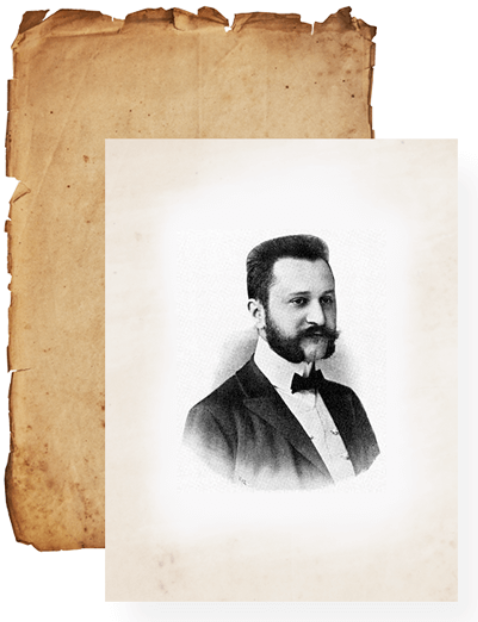
The Harmanec mill was built in 1829 by the merchant of Banská Bystrica, František Zikmund Leicht, originally as the handmade paper manufacture. In the mid-19th century, it belonged to the most state-of-the-art paperworks in Austria-Hungaria. At the turn of the 19th and 20th century, the plant launched the hygienic paper product manufacturing. At first, the folded toilet paper under the Hermandol brand, later adding the hand-cut paper napkins. During the World War 2, the product range was extended by the production of feminine pads and baby nappies made of artificial cotton. The modern history of the paperworks started in 1972, when the paper machine was put into operation, manufacturing the hygienic papers and a new raw material – the waste paper – started to be used. The paperwork has maintained the character of the modern and dynamically developing company until today. In 2002, the Harmanec Paperworks were renamed to SHP Harmanec and became a part of the group of production and business companies having the production and distribution of hygienic paper products as their scope of business, under the common title of SHP Group.
Ecopap s. r. o. was established in 2016 as a 100% subsidiary of SHP Harmanec. Its main task is to provide recovered paper for the needs of the production process at SHP Harmanec in the required quantity, range and quality. To find out more please visit Ecopap website.
-
On a green field called “Pod košiarom” (“Under the sheepfold”), in the cadastre of Dolný Harmanec, the merchant of Banská Bystrica, František Zigmund Leicht, founded the original paperworks.
-
The paper machine production was launched and the Harmanec Paperworks became the second largest paperworks in Austria-Hungaria.
-
Registration of the “White Swan” trademark, which is the oldest registered and maintained trademark in the territory of the Slovak Republic.
-
The Harmanec Paperworks, as the first in the former CSSR, started manufacturing the toilet rolls.
-
All the products of SHP Harmanec were renamed to HARMONY, with the exception of the Harmasan toilet rolls.
-
The Harmanec Paperworks was integrated into SHP (Slovak Hygienic Paper) Group and changed its title to SHP Harmanec.
Slavošovce
The municipality of Slavošovce, founded in 1318, lies in the region of Horný Gemer. In 1817, the dilapidated plant in Slavošovce, rebuilt to a paper mill and since then, the production of paper in this municipality is dated. The paper production development in Slavošovce was not simple. Apart from the first decades, the company was moving in extremes almost all the time. It was overcoming crisis but at the same time was being constructed and modernised. In the Czechoslovak Republic era in 1923, the paperworks got into a financial crisis and a sell-off was suggested. Professor Ursíny from Czech Technical University in Brno spoke in favour of manufacturing in Slavošovce at the prime minister, thanks to which the paperworks obtained a state subvention for its renewal. In the 20th century, the paperworks concentrated on the manufacturing of school copybooks and pads. The paper napkins only comprised a part of the manufacturing program. After integrating the company in the SHP Group as SHP Slavošovce, its direction has been oriented on the production and sale of paper napkins.
-
The dilapidated plant in Slavošovce was rebuilt to a paper mill.
-
After financial crisis and suggersted sell-off, manufacture in Slavošovce obtained a state subvention for its renewal, thanks to professor Ursíny.
Celex
Since 1966, SHP Celex is a proud producer of paper hygienic products, such as kitchen rolls and toilet paper. The mill is located in Banja Luka, where the paper machines produce around 40 000 tons of paper per year. It has been 20 years since Celex became a member of SHP Group. We continuously invest in technology development, for instance, in 2022, we introduced a brand-new TL 15 line which aims to bring top quality products to market, utilizing the most up-to-date technologies of the current converting industry. The mill employs up to 300 employees, supporting young talents with various employee development programs. Throughout the years, our mill supported local communities in Banja Luka and Republika Srbska, for further details please visit Celex website in the menu section.
History of SHP Celex
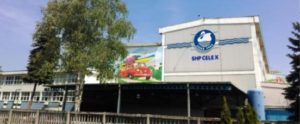
The company SHP CELEX, a. d., Banja Luka is the successor company of ZDP Celex, Banja Luka in Bosnia and Herzegovina. The original company had a rich history, a lot of experience and a good reputation in the field of manufacturing paper hygienic products in the countries of former Yugoslavia. Modern history of the company started on 27 June 2002. On this day, the paper machine was put into operation after an extensive reconstruction, followed by the processing lines. Thereby, a new stage of paper hygienic products in the refurbished SHP Celex plant started. Three years after the renewal of production, the paper production increased four times and nowadays, the company has a strong potential of further development and prosperity.
Paloma
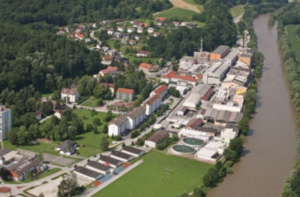
Paloma is a public limited company with a more than 140-year tradition in the manufacture and marketing of hygienic paper products in Europe and is the market leader in South-East Europe. The company has four divisions and is predominantly export-oriented. Annual capacity is 72,000 tonnes of hygienic paper. Our business policy, which is supported by all company employees and external contractors, provides a framework for the continuous setting of objectives and programmes for improvement, ensuring we are committed to fulfilling individual objectives and providing added value to investors. This policy is available for consultation by all interested parties.
-
Start of operation of the Sladkogorska paper factory, a plant for the production of cardboard and wood pulp using the water of the river Mura as a power source and the extensive forests in the area as a source of raw materials. After a little over 10 years, the factory registers its activity. Manufacturing process: The machinery was driven by two small manually regulated water turbines, carboard was dried in air drying rooms (steam dryers were not yet known) and all other aspects of the process were extremely primitive. Annual output: 900 tonnes of products. No. of employees: 60.
-
Founding of the factory in Ceršak.
-
Shortly after Duke Robert of Parma purchased the factory from Count Lucchesi-Palli, it burnt down.
-
Founding of the factory in Prevalje
-
Production resumes under the new owner, Daniel Feuerloscher. Manufacturing process: The old drying plant is replaced by a new one in which up to 12 wagonloads of cardboard could be dried. The first wood steaming plants were built to enable the manufacture of brown cardboard. Sufficient hydropower was provided by enlarged inflow and outflow channels.
-
The consequences of the First World War were also visible in the factory. Machinery: five cardboard machines two Francis turbines (280 and 560 hp) one Jonval turbine (170 hp) two hydraulic grinders for wood other machines – all in a poor state of maintenance. Daily production: 5 tonnes patent cardboard and 4 tonnes air-dried cardboard No of employees: 85. Products: brown and white cardboard, wood pulp.
-
Purchase of the first paper machine. Then owner Josip Rosenberg makes the decision to buy a paper machine and the factory changes its name to “”Cardboard and Paper Factory””. Machine: VOITH purchased for the production of one-sided smooth wrapping paper and paper for cardboard tubes and packaging with a width of 1.75 m. It reached a speed of 120 m/min the steam needed to power the machine and for the drying process was supplied by new steam boilers Annual output: 4 800 tonnes No of employees: 160. Products: papers, wood pulp and cardboard.
-
Construction of aerial ropeway. The double or triple process of loading and unloading raw materials, the distance from the Weitersfeld railway station and the high tariffs charged by the Austrian railway operators persuaded Sessler (a relative of Josip Rossenberg’s) to build a 6.2 km aerial ropeway.
-
Installation of paper machine No 2. Machine: VOITH for the production of raw roofing cardboard could make cardboard up to 1300 mm thick. Annual cardboard production: 15 tonnes.
-
Unification of the paper industry in NW Slovenia. Five companies operated under a single management based in Maribor: the Sladkogorska and Ceršak operations and the factories in Podvelka, Prevalje and Mislinja. The joint name for this combined company was Sever Papir (“North Paper”).
-
Planning of the main production plant and other buildings at the Sladki Vrh site. The decision was made to refocus the entire activity of the company, in the first phase of reconstruction, to thin papers. The decision was made to refocus the entire activity of the company, in the first phase of reconstruction, to thin papers. The subsequent reconstruction included the purchase of new paper machines and the upgrading of existing ones.
-
Installation of paper machine No 3. Machine: ER-WE-PA for the production of wrapping paper and hygienic paper in the first phase, paper prodution increased by 6000 tonnes a year width 2.48 m Annual output: 20 000 tonnes (all papers)
-
Installation of paper machine No 4. Machine: ER-WE-PA for the production of tissue paper width 2.5 m speed 750 m/min A new production hall was also built at this time for the preparation of raw materials, and for the new raw material preparation required by the new paper machine No 4. With the installation of the new paper machine, an increase in the use of processing water was foreseen, which required a new water treatment plant to be set up. New power plants were also installed, including a steam boiler, a steam turbine and an entirely restructured power grid. The new type of paper enabled the production of new products: one-ply and multi-ply white, coloured and printed napkins.
-
Purchase of the first semi-automatic machines for roll production. The advantage of these was in the rewinders, which were connected to slitters, thus giving the sensation of a complete line. A single-track machine for paper handkerchiefs was also installed. A year later, with the purchase of three Lerner machines, the company began manufacture of new product – packs of folded toilet paper. The company later began building these machines itself, with the result that by 1978 their number had grown to 18.
-
Installation of paper machine No 5. Machine: ER-WE-PA for the production of tissue paper width 2.5 m speed 900 m/min An enormous amount of work was carried out in this period. All the older paper machines were renovated. The expansion of paper processing required a new, second hall for paper converting and the new machine No 5. The installation of the latter enabled the further expansion of production. New machines were installed for the production of toilet rolls, sanitary towels, nappies, multi-purpose towels, napkins and tissues. Annual output: 40 000 t. No of employees: 1,100.
-
Installation of paper machine No 6 Machine: ER-WE-PA for the production of toilet tissue width 5.2 m speed 1200 m/min With the installation of paper machine No 6, production increased by 35,000 tonnes. At the same time the company modernised its heating system, shifting from fuel oil to gas, which brought major environmental improvements. The introduction of closed circuits contributed to a reduction in the consumption of water and fibres per tonne of paper. Total annual output: 75,000 tonnes This same year Tovarna lepenke Ceršak p.o. and Tovarna lesovine in lepenke Prevalje p.o. were merged into Sladkogorska tovarna papirja Sladki Vrh p.o.
-
Construction of a high-bay warehouse
-
Installation of de-inking plant. A pulp preparation plant
-
which enabled the company to produce high-quality paper from cheap old paper. No of employees: 2019.
-
New developments in the converting departments. A new HOBEMA machine (9th line) was purchased for the production of printed (four-colour) and non-printed napkins with automated control. Roll lines were modenised with new gluing units and reel storage. This was not actually key year for modernisations, since many of these had been carried out in previous years. They included a change to the method of palletising products using stretch wrap, the installation of packaging machines with more advanced electronic controls, toilet paper transport systems, a new production line for Tempo high-quality tissues, etc.
-
Sladkogorska tovarna papirja Sladki Vrh n.sol.o. was renamed and became the socially-owned enterprise Paloma – Sladkogorska tovarna papirja p.o., Sladki Vrh 1. No of employees: 2,052.
-
odernisation of paper machine No 4. The substitution of the round sieve with a longitudinal/diagonal one allowed higher quality production of tissue paper for napkins and facial tissues. No of employees: 1,842.
-
Installation of a modern pocket tissue production line. This represented a major jump in capacity and technology. Featuring computer-controlled machinery and a fully automated line, it was incomparably more modern than the existing technology. No of employees: 1,805.
-
On 24 July 1996 the Court of Registration in Maribor issued a decision on the transformation of the socially-owned Paloma – Sladkogorska tovarna papirja p.o. into a limited liability company, and on 14 June 1996 the company was acquired by the Slovenian Development Corporation (SRD). On 1 March 1999 Tovarna lepenke Ceršak became an independent company, as did Tovarna lepenka Prevalje on 1 May 1999. No of employees: 1,521.
-
Redesign of the company’s Paloma umbrella brand
-
Acquisition of ISO 9001 certification. This same year Paloma became a public limited company and installed paper machine No 11 for printed napkins, featuring a new multicolour printing method.
-
Modernisation of toilet roll production. Toilet roll production was modernised and an ISO 14001 environmental management system was implemented.
-
The reason for constructing the treatment plant was to eliminate pollution of the environment with waste water from Paloma and sewage from the compact settlements in Sladki Vrh. The first trial run of the treatment plant took place on 17 October 2002. Other notable events in 2002 included: Construction of a warehousing/distribution centre in Šentilj. The new distribution centre consists of three large warehouses, an administrative annexe and a machinery shed and covers a total area of 7,500 m2. The distribution centre is a modern facility with a covered loading area for rail transport. New line for folded towels. Addition to the tissue packaging range. A new tissue packaging machine allowed us to expand our range of large packs from the existing 24 packets in one roll (2411) to 48 packets (4811). New line for maxi rolls and towels. Acquisition of OHSAS 18001 certification for occupational health and safety.
-
This year Paloma celebrates its 130th anniversary. This is also the year we obtain ISO 9001:2000 quality management certification. In May we redesigned the Paloma website, adding interactive and multimedia functionality and a range of new content, and improving usability and layout.
-
Establishment of Paloma Horgen. Deployment of the new iScala integrated information system and the establishment of Paloma Horgen d.o.o. in Ceršak for the manufacture of crêpe products.
-
Acquisition of a 40% share of subsidiary Paloma Horgen d.o.o. (Paloma d.d. becomes the sole owner).
-
This year Paloma Horgen d.o.o. was merged with Paloma d.d. The year also saw the start-up of a new 13th line for the production of pocket tissues.
-
Launch of Away From Home products in key markets. In 2008 the entire AFH division was modernised and products were launched in key markets with new packacking.
-
Start-up of the 11th toilet paper and kitchen towels production line.
-
Paloma receives a si.Brand Top 50 certificate. This year, in addition to receiving a certificate from consumer research organisation si.Brand, Paloma: Obtained the BRC (British Retail Consortium) standard, Introduced its new Paloma Professional Palbib napkins, Invested in the installation of solar collectors on the factory roofs – a reorientation to the use of renewable energy sources.
-
With the arrival of Tadej Gosak as the new Chairman of the Management Board, 2013 saw many changes and innovations. Paloma’s corporate identity was completely redesigned. The company received the basic Family-Friendly Company certificate. On the production side, energy efficiency was improved by the replacement of a steam boiler.
-
Redesign of the Paloma product range. This year saw the start of the process of redesigning the product range in the “Consumer” division, which includes Paloma’s toilet paper, facial tissue, kitchen towel and napkin ranges. Investment in the wrapping of parent reels also began. In the human resources field, mentoring and induction programmes began to be introduced.
-
Paloma products selected as Products of the Year 2015. Sensitive Care toilet paper and facial tissues and Super Care paper towels awarded certificates as Selected Products of the Year for 2015. This year also saw a redesign of the Away From Home range, which includes the Paloma Professional brand. Paloma also obtained an EBRD loan and reached an agreement on the rescheduling of its debts.
-
Modernization of the paper machine No. 5 and recapitalization of the company. 2016 was a turning point for Paloma. That was when the recapitalisation process by the ECO-INVESTMENT private fund was successfully completed. With this, the company gained significant financial and strategic support to continue its development cycle. Thanks to equipment modernisation, increased investment in Paper Machine 5, as well as improved productivity and efficiency in all areas of operation, paper production increased by 2% up to 67,000 tons, with final product output increasing by 4%, amounting to 63,000 tons.
-
Paloma gets a new owner. In September, ECO-INVESTMENT, a.s. became the 100% owner of the share capital of Paloma d.d. Paloma d.d. announced its project for the renovation and modernisation of Paper Machine 6 into a top-quality full-width paper machine with a capacity of 65,000 tons, which would increase the total paper production capacity to 90,000 tons.
-
Obtaining documentation for PS9. In April, Paper Machine 3 (PS3) was permanently shut down at Paloma d.d. At the end of the year, the last clothing production line in Ceršak was closed. The process of obtaining documentation for the new Paper Machine 9 (PS9) was in full swing.
-
A new PS9 machine starts up. The year was marked by the epidemic being officially declared on 12 March 2020 due to numerous coronavirus infections in the country, which led to an exceptional demand for paper hygiene products, especially toilet paper. In June, Paper Machine 6 (PS6) was permanently shut down. In October, trial production began on the new Paper Machine 9 (PS9).
OUR BUSINESS BRANCHES
Bohemia
The necessity of the origin of the SHP Bohemia business company was closely connected to the origin of the two independent republics, the Czech and Slovak Republic. SHP Harmanec, a.s., was traditionally selling a part of its production on the Czech market. If they wanted to continue and develop its trading in the territory of the Czech Republic, it had to create a new business unit. In November 1996, SHP Bohemia was founded, with the centre of the operation in the town of Kromeříž. Since March 2003, the Company moved its seat to Prague.
Bratislava
In 2022 we have opened a new office in Bratislava, the capital city of Slovakia. The branch focuses on the sale of paper in Slovak, Hungarian and DACH markets.
Zagreb
A business company that focuses on the sale of paper hygiene products in Croatian market.